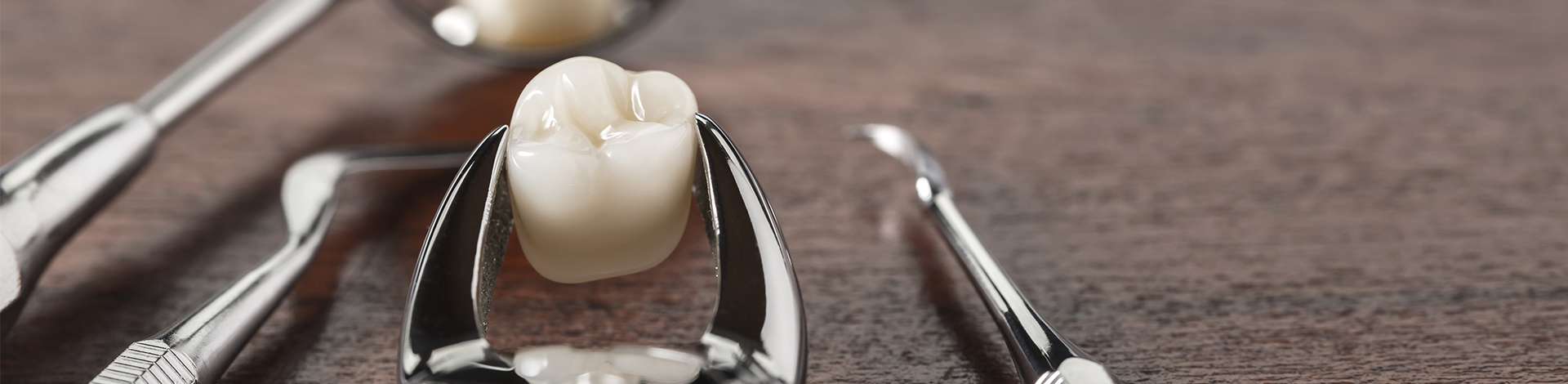
Numbing cream will be given followed by local anaesthesia to make it a comfortable experience for you. The non salvageable tooth will be gently elevated from the tooth socket and you will be discharged for home as soon as the wound has clotted shortly after.
If the tooth is badly broken down or growing out at an awkward angle, it may be necessary for your dentist to recommend surgical excision of your tooth. This means that some bone around the tooth may need to be removed to allow your dentist to get a good grip on the broken pieces so they can be removed from your jaw.
In the case of an impacted wisdom tooth (wisdom tooth growing at an awkward angle), the same process of surgical excision may also be necessary and this may also involve the division of the tooth for clean removal.
At TP Dental, we have the option of having the above mentioned procedures performed under sedation, relative analgesia or general anaesthesia as well.
Defining Wisdom Teeth
Wisdom teeth are a set of molars that surface during their early twenties or the late teens. If your mouth has room to grow, wisdom teeth can sprout properly and help you chew food better. If it doesn’t, however, the wisdom tooth could end up buried under the gum tissue or partially erupt at an inconvenient time.
Why You Need to Have Your Wisdom Tooth Extracted
When a wisdom tooth causes problems, you need to visit a dentist as soon as possible. Here’s why:
- Your wisdom tooth could potentially damage your neighbouring teeth. The extra molars will surface by pushing other teeth. Undergoing wisdom tooth removal, therefore, is necessary, as your extra molars could cause bite and mouth problems.
- Problematic wisdom teeth could result in the development of cysts (and sometimes tumours) in the mouth. If left untreated, these molars can damage nerves and jawbone.
- Even if you don’t feel any pain or suffer from other serious complications, your wisdom teeth can undermine your oral hygiene. Brushing and flossing around a wisdom tooth, for instance, can be difficult due to its hard-to-reach location.
Common Types of Impacted Wisdom Teeth
Impaction happens when a wisdom tooth is crowded and cannot erupt properly, or erupts forcibly through the gum in a compromised position. A few of the common kinds of wisdom teeth impaction are:
- Vertical Impaction – The orientation of the erupted tooth is nearly upright.
- Mesial Impaction – The angle of the tooth is facing the front of the mouth.
- Horizontal Impaction – The tooth is growing underneath the gum and parallel to the jawbone.
We make the tooth removal process as comfortable and pleasant as possible. Our experienced dentists in Singapore use numbing cream and local anaesthesia to reduce discomfort and self-resolving sutures for added convenience. Additionally, we use cutting-edge dental equipment and technology to safely remove the impacted wisdom tooth.